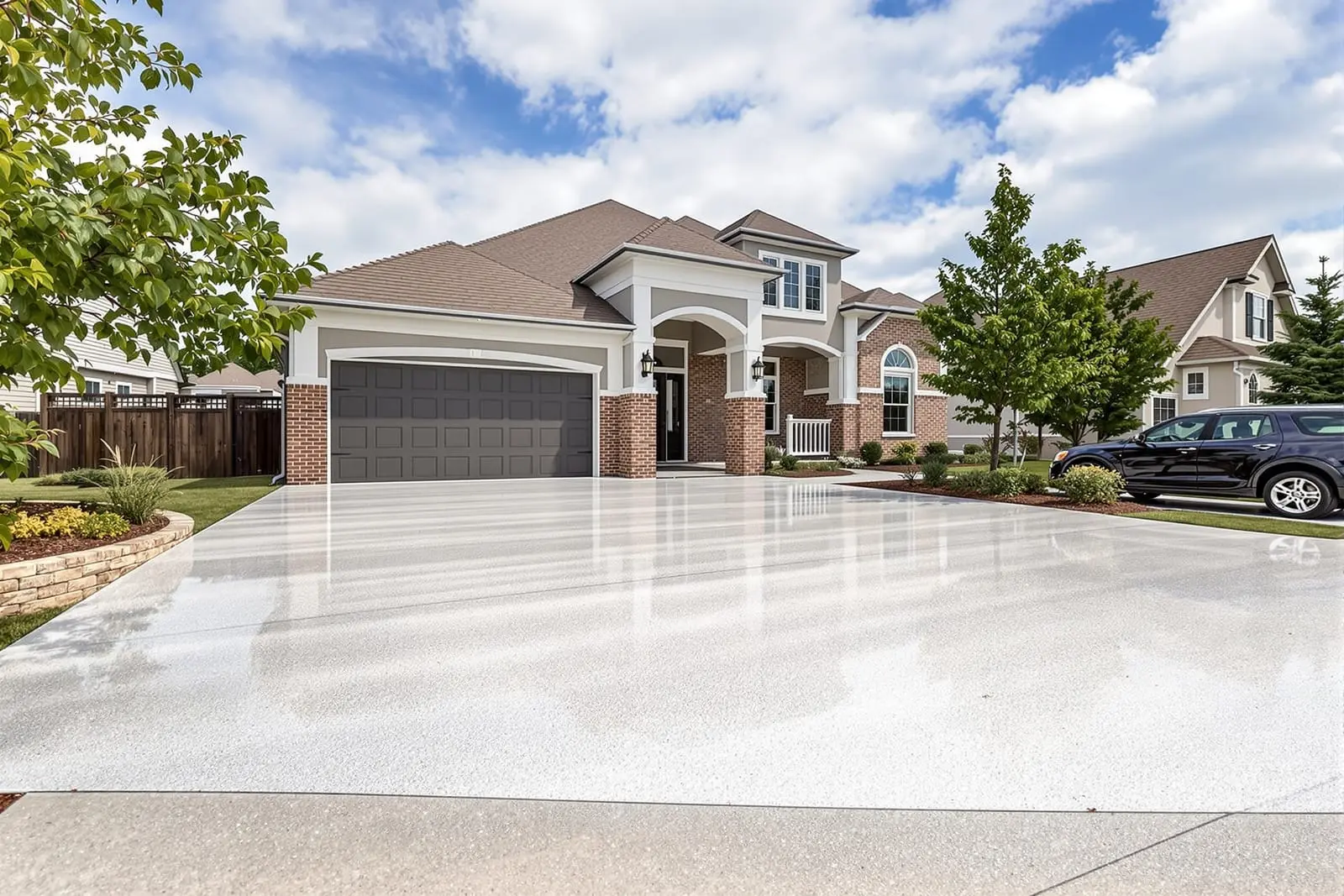
Maintain a safe, professional property with commercial concrete repair in Colorado Springs, CO. We address cracks, spalls, and settlement in walks, parking areas, and interior slabs. Resurfacing options can restore appearance without full replacement when conditions allow. Schedule an evaluation to prioritize concrete repairs across your site.
Primetime Concrete Colorado Springs provides professional commercial concrete repair throughout Colorado Springs, CO and the surrounding area. Our licensed, insured crew delivers safe, clean, on-time work with a free estimate before anything begins. Call (719) 826-8457 or request your free quote.
Commercial Concrete Repair for Colorado Springs Properties
Commercial concrete in Colorado Springs takes a beating from freeze-thaw cycles, deicing salts, and heavy traffic. When slabs start spalling, cracking, or settling, it is not just ugly, it can turn into a safety and liability problem. Primetime Concrete Colorado Springs focuses on commercial concrete repair and resurfacing that fits how local buildings are actually used, from warehouse loading docks and restaurant patios to medical office walkways and church parking lots.
Instead of pushing full replacement right away, we look for the most cost-effective way to stabilize and extend the life of your existing concrete. That might be structural crack repair, doweling and stitching joint failures, partial-depth patching, or a resurfacing system that renews the top layer. We are used to working around open businesses and occupied facilities, so planning phasing, access routes, and cure times is part of the job from the start.
You will get straight talk about what can be repaired and what truly needs to be torn out. In our climate, some damage is only cosmetic and can be resurfaced, while other problems point to base failure or drainage issues that must be corrected or any repair will be short-lived. We walk the site with you, flag hazards, and outline practical options with realistic service lives, not best-case scenarios that ignore Colorado Springs weather.
How We Actually Repair Commercial Concrete
The commercial concrete repair process starts with inspection and testing, not a quick estimate from the parking lot. Primetime Concrete Colorado Springs checks slab thickness, joint layout, drainage paths, and signs of movement, like differential settling between panels or step cracks at structural elements. We may sound the slab with a hammer or chain drag to find delaminated areas where the top layer has separated from the base.
Once we know what we are dealing with, we handle structural issues first. For trip hazards between slabs, we may use slab grinding or slabjacking (pressure injection beneath the slab) to gently lift low sections. For wide or working cracks, we saw cut and install dowel bars or stitch bars across the joint, then fill with a flexible industrial joint filler so slabs move together instead of independently. This reduces future chipping at joints and keeps warehouse equipment from pounding the edges to pieces.
Spalled or broken areas are cut out in rectangles or squares so repairs have clean, straight joints. We remove all weak material, clean and sometimes sandblast the edges, then apply bonding agents and place high-strength repair mortar or new concrete, depending on depth. In freezer-adjacent spaces or areas exposed to deicers, we specify air-entrained mixes and low-permeability materials that handle our local freeze-thaw swings.
For sidewalks, entries, and ADA paths, we look at code compliance while we repair. Sometimes the fix is not just filling a crack. We may need to re-pour a short run of walk to correct slopes or add truncated dome panels at crosswalks. We coordinate with your facility manager or property manager to sequence work so tenants and customers still have a safe way in and out while concrete cures.
Concrete Resurfacing Options That Work in Our Climate
Resurfacing can be a smart choice for worn but structurally sound commercial slabs. Primetime Concrete Colorado Springs uses different resurfacing systems depending on how the surface will be used, how fast you need it back in service, and what the weather will do during installation.
For parking decks, loading zones, and busy walks, we often use polymer-modified overlays that bond tightly to existing concrete and resist deicing salts. These overlays are applied in thin lifts, usually 1/8 to 1/4 inch, over properly prepared concrete. Preparation is critical. We mechanically prep surfaces with grinding or shot blasting to open the pores, remove sealers and contaminants, and give the new material something to bite into. Skipping this step is why many cheap resurfacing jobs start peeling within the first winter.
In retail entries, restaurants, and offices where appearance matters, we can trowel or spray decorative overlays, then add texture for slip resistance once sealer is applied. These give you the look of new broom-finished concrete, light texture for snowy days, or even a stained finish, but with less disruption than a full tear-out. On interior commercial floors, like shops or showrooms, we may recommend self-leveling overlays that create a smooth, flat base for traffic or future epoxy systems.
Because Colorado Springs has big temperature swings, we plan resurfacing around overnight lows and daytime highs. Certain products should not go down if temperatures will drop too fast, or they can craze or lose strength. We schedule pours, use cold or warm water in mixes when needed, and sometimes use temporary windbreaks or surface covers to keep conditions inside manufacturer specs so your resurfacing lasts.
Common Problems, Costs, and What Drives Your Price
No two commercial concrete repair projects are the same, but there are patterns in Colorado Springs. We often see:
• Scaling and surface flaking from repeated deicer use on sidewalks and at entries.
• Joint spalling in warehouse slabs from forklift traffic and hard-wheeled carts.
• Settlement near downspouts and snow storage areas where water undermines the base.
• Pop-outs and pitting on older 1970s and 1980s era slabs that did not get air-entrained mixes.
Your cost depends on how each of those shows up on your property. Key drivers include how much prep is needed, whether the base is stable, access for equipment, and how fast you need the work completed. Grinding and joint sealing on a strip mall sidewalk with good access may be straightforward. Stabilizing settled panels in a tight, fenced-in service yard with buried utilities nearby takes more planning and often smaller equipment, which affects labor time.
Material choice matters as well. A basic patch mix is cheaper than an engineered repair mortar, but it may not hold up under heavy truck traffic or winter salting. We usually give options with plain language pros and cons, like: lower upfront cost with shorter expected life, or higher upfront cost with better performance and less disruption down the road. Because many commercial owners are planning around budgets and capital cycles, we can also phase work over multiple seasons, tackling safety-critical areas first.
We are clear about staging and traffic control costs. If repairs must be done at night to keep a grocery store open by day, or if a medical building needs complex access routing to protect patients, that scheduling affects the budget. Primetime Concrete Colorado Springs includes these details in writing so you are not surprised during the project.
What Colorado Springs Owners Should Check Before Hiring
Before you hire anyone for commercial concrete repair or resurfacing, there are a few Colorado Springs specific issues to ask about. First, ask how they are planning around freeze-thaw cycles and deicers. If a contractor cannot explain what air-entrained concrete is, when to use a low water-cement ratio, or why some overlays fail after one winter, that is a red flag in this market.
Second, ask about surface preparation methods. Proper commercial resurfacing almost always involves mechanical prep, like grinding or shot blasting, not just pressure washing. A contractor should be able to tell you exactly how they will remove old sealers, cure-and-seal coatings, paint, and oil stains before they install new material. Good bonding is what separates a 1 to 2 year band-aid from a 10 year solution.
Third, make sure they understand how your building is used. Repair strategies are different for a Class A office entry on Tejon Street, an industrial shop on the east side, and a church parking lot that fills up heavily twice a week. Primetime Concrete Colorado Springs walks through traffic patterns, heavy load areas, snow stacking locations, and future renovation plans before we finalize a scope.
Finally, ask about phasing, communication, and documentation. You should expect clear schedules, daily or weekly updates depending on job size, and a written description of where repairs and overlays were placed for your maintenance records. Having this paper trail helps when you budget for future work or sell the property, and it gives your risk manager proof that you have addressed trip hazards and surface defects in a documented way.
“
Professional commercial concrete repair & resurfacing, done right the first time, quality materials, honest pricing, and results that last.
Primetime Concrete Colorado Springs
Commercial Concrete Repair & Resurfacing Across Our Service Area