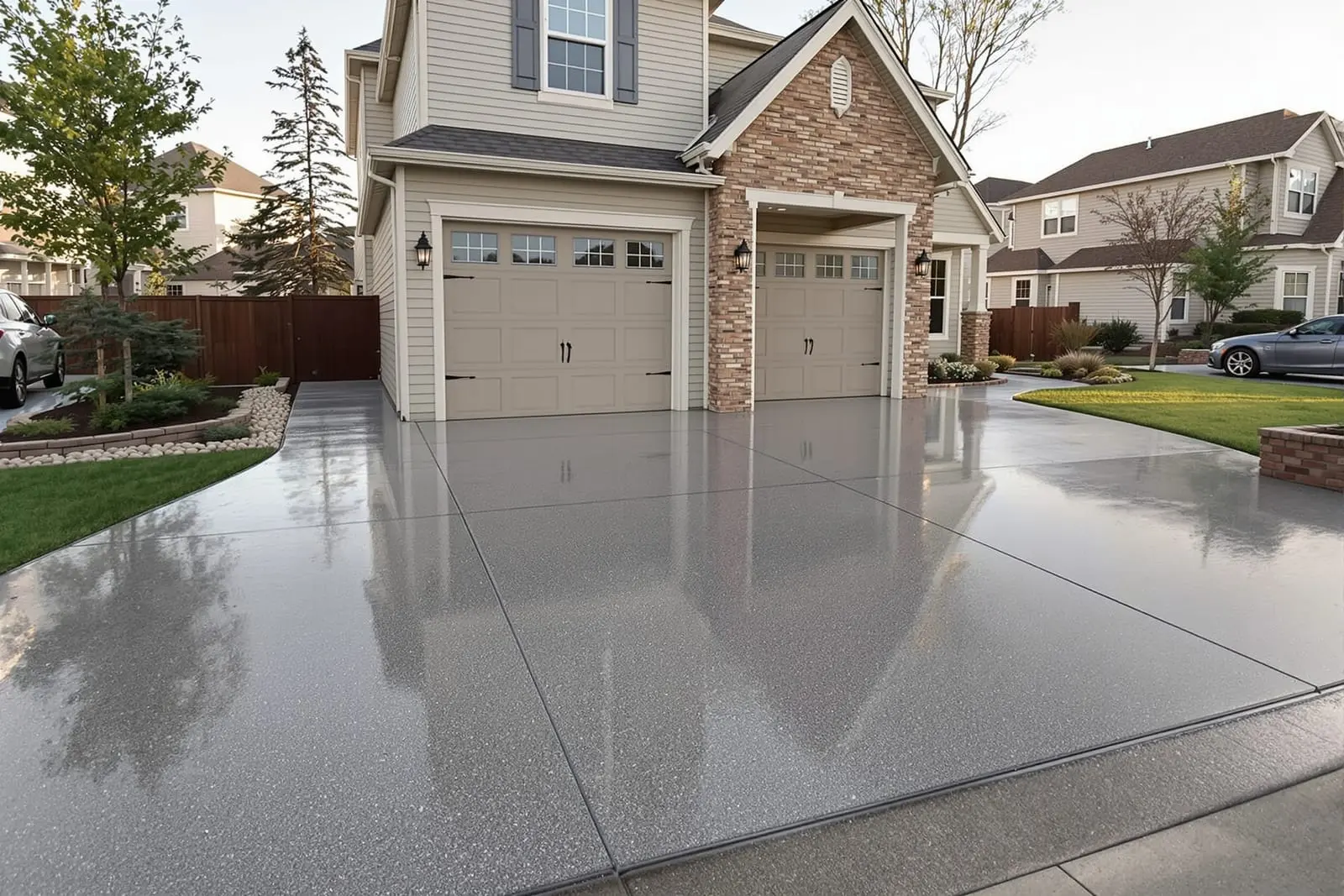
Get a smooth, durable surface underfoot with a new concrete garage floor in Colorado Springs, CO. We install and replace slabs that stand up to vehicles, storage, and workshop use. Our team also pours flat, level basement floors ready for finishes or storage. Reach out for a quote on garage or basement concrete flooring tailored to your space.
Primetime Concrete Colorado Springs provides professional concrete garage floor throughout Colorado Springs, CO and the surrounding area. Our licensed, insured crew delivers safe, clean, on-time work with a free estimate before anything begins. Call (719) 826-8457 or request your free quote.
Durable concrete garage floors for Colorado Springs homes
A concrete garage floor has to handle Colorado Springs reality: hot summer days, winter freeze-thaw cycles, ice melt chemicals, and the grit that blows in off Powers and Academy. At Primetime Concrete Colorado Springs, we design and install garage slabs specifically for Front Range conditions so they stay flat, safe, and good looking for decades, not just a few seasons.
Most garages here sit on sloping lots or expansive soils, especially in neighborhoods like Briargate, Stetson Hills, and the west side. That means drainage and sub-base preparation matter as much as the concrete mix itself. Before we talk finishes or coatings, we look at how water moves across your driveway, where meltwater will run when your car pulls in, and how the existing foundation is performing. Then we recommend a concrete garage floor plan that fits your house and the way you actually use the space, whether that is basic parking, a workshop, or storage for toys and gear.
How we install a long lasting concrete garage floor
A quality concrete garage floor starts with the base. We remove any failed slab or soft material, then compact the subgrade with a plate compactor or roller until it meets density standards for our region. In many Colorado Springs soils, we add 3 to 4 inches of road base or crushed rock to improve drainage and reduce movement from clay expansion.
Once the base is tight and level, we install forms and check elevations with a laser so the slab ends up perfectly pitched toward the door or floor drain. We then place a vapor barrier where needed, set welded wire mesh or rebar reinforcement, and add perimeter isolation material around foundation walls to allow slight movement without cracking the concrete.
We typically pour a 4 inch thick slab for standard residential garages and will recommend 5 inches or additional reinforcement if you park heavy vehicles, RVs, or trailers. We use a concrete mix that is air-entrained for freeze-thaw durability and adjust aggregate and slump based on access and the time of year. After pouring, we strike off, bull float, and then power trowel for a smooth but slip-resistant finish that works well with future coatings.
Concrete basement floors that stay dry and level
Basement concrete floors in Colorado Springs have a different set of challenges. Many homes east of I-25 have active soils and seasonal moisture changes, which can cause hairline cracking or slight movement if the slab is not properly planned. Primetime Concrete Colorado Springs evaluates your existing foundation, drain tile, and sump system before recommending any basement floor work.
For new or replacement basement slabs, we start by checking moisture levels in the subgrade and ensuring proper drainage to sump pits or perimeter drains. We install a poly vapor barrier, typically 10 mil or thicker, to reduce moisture migration through the slab. On top of that we place reinforcement, then pour a slab that is usually 3.5 to 4 inches thick for standard residential basements.
Basements that will be finished as living space, home gyms, or rental suites benefit from tighter flatness tolerances so flooring like LVP, tile, or carpet lays correctly. We use laser levels and straightedges during finishing to get a uniform surface. If radon mitigation is a concern, which it often is along the Front Range, we coordinate slab penetrations and sealing around radon piping so your mitigation system and basement floor work together.
Finish options for garage and basement concrete floors
You can keep your concrete garage floor or basement slab plain, or you can upgrade the look and performance. We walk you through realistic options based on how you use the space, your budget, and the age of the home.
For garages, popular choices include a broom finish slab that provides grip in wet or snowy conditions, or a power troweled surface that is ideal under epoxy and polyaspartic coatings. We can add saw-cut control joints in a layout that both manages cracking and looks clean, instead of random cracks appearing later. In some cases, especially for workshop-style garages, we suggest a densifier and clear sealer to reduce dusting without going to a full coating system.
Basement concrete floors often get prepared for future floor coverings. We can leave a smooth, level surface ready for floating vinyl, laminate, or carpet, or we can stain and seal the concrete for a low maintenance finished floor. For homeowners wanting a polished concrete basement, we coordinate grinding and polishing stages to hit your desired sheen, and we plan joints and transitions to line up with future walls and doorways.
What affects the cost of a concrete garage floor or basement slab
Concrete pricing in Colorado Springs is driven by more than just square footage. Primetime Concrete Colorado Springs walks you through each cost driver so you can make informed decisions and avoid surprises.
Access is one of the biggest factors. If a concrete truck can back right up to your garage, costs stay lower. If we need pumps, long chutes, or extra labor to wheelbarrow concrete around tight corners or down to a basement, that adds time and equipment expenses. The thickness of the slab and reinforcement type, such as rebar versus wire mesh, also change the material cost.
Existing conditions play a big role too. Removing a cracked, heaved garage slab with thick edges, common in 1970s and 1980s homes here, takes more labor and disposal than replacing a thin, already broken floor. In basements, old tile, adhesives, or high moisture content can require extra prep or moisture mitigation before a new slab or overlay is installed. Finally, finish choices, from simple broom finishes to decorative stains or coatings, have different labor and material requirements that we spell out in your written estimate.
Common concrete floor problems in Colorado Springs and how we fix them
Local homeowners call us with a few recurring problems: spalling from ice melt chemicals on concrete garage floors, uneven or sloped basement slabs in older homes, and cracks that keep growing year after year. We do not just cover these issues; we address the causes.
For surface spalling, we evaluate how deep the damage goes. Light damage may be resolved with grinding and a high build coating system. Deeper spalling often means removing and replacing sections of the slab and correcting drainage so water and chemicals do not sit in the same spots every winter. Where slabs are settling near garage doors or along foundation walls, we check for drainage problems, downspouts dropping water at the slab edge, or poor original sub-base preparation.
In basements, if a slab is badly out of level or has repeated moisture issues, we may recommend full replacement along with improvements to drains, vapor barriers, or radon systems. When replacement is not necessary, self-leveling toppings can correct modest unevenness before you install new flooring. We always look at the structure as a whole, including foundation cracks and exterior grading, so that any fix we implement lasts in Colorado Springs conditions.
What to expect when you hire Primetime Concrete Colorado Springs
Our process is straightforward, and it is built around respect for your home and schedule. We start with an on site visit, not a guess over the phone. During that visit we measure your garage or basement, check access, look for moisture or structural concerns, and listen to how you plan to use the space. Then we prepare a detailed written proposal that breaks out removal, prep, concrete work, finishes, and any optional upgrades.
On installation day, we protect adjacent areas, set up forms, and complete all base preparation before any concrete truck is called. Most residential concrete garage floors are poured and finished in a single day, with another visit for joint cutting and final cleanup. Basements may take a bit longer, especially if they involve additional prep, moisture treatments, or decorative finishes.
Curing is key to long term performance. We ask that you keep vehicles off a new garage slab for at least 7 days, and avoid heavy loads until 28 days when the concrete reaches most of its design strength. For basements, we review timing for framing, flooring installation, and when coatings or stains can be safely applied. Throughout the process, you have a local contact you can reach with questions, and after the job is done, we remain available if anything comes up during your first winter or summer with the new floor.
“
Professional garage & basement concrete floors, done right the first time, quality materials, honest pricing, and results that last.
Primetime Concrete Colorado Springs
Garage & Basement Concrete Floors Across Our Service Area