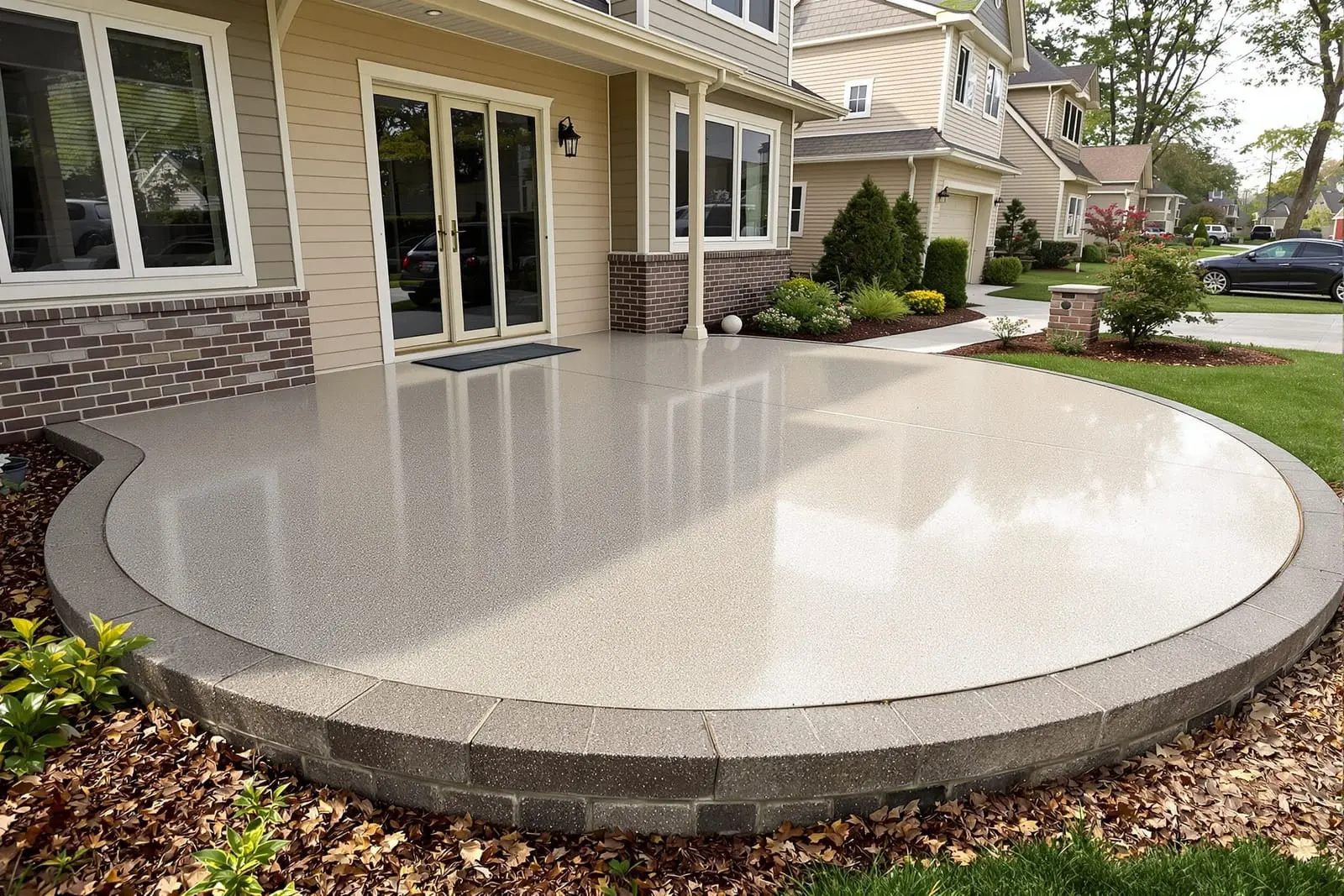
Create a comfortable outdoor living area with professional concrete patio installation in Colorado Springs, CO. We design and pour patios sized and shaped for your yard, furniture, and entertaining needs. From simple slabs to multi level layouts, our patios are reinforced and finished to handle heavy use and changing weather.
Primetime Concrete Colorado Springs provides professional concrete patio installation throughout Colorado Springs, CO and the surrounding area. Our licensed, insured crew delivers safe, clean, on-time work with a free estimate before anything begins. Call (719) 826-8457 or request your free quote.
Concrete patio installation done right in Colorado Springs
A concrete patio is a work surface that has to handle sun, snow, freeze-thaw cycles, grills, furniture, and people using it every day. At Primetime Concrete Colorado Springs, we build patios that match how you actually use your yard, not just what looks good in a photo.
When you call us for concrete patio installation, we start with a site visit. We look at slope, drainage paths, existing downspouts, soil conditions, and how you move from your back door into the yard. In Colorado Springs, many lots have a noticeable grade and clay-heavy soils, so we pay close attention to where water naturally wants to go and how the patio will move with seasonal ground changes.
We give straight answers about what will work on your property. If a design will push water toward your foundation, create an ice problem in winter, or require constant maintenance, we will say so and suggest alternatives. Our goal is a patio that still works and looks solid 10 or 20 years from now, not just on the day it is poured.
Planning your concrete patio layout, size, and use
Useful concrete patio installation starts with what you plan to do on it. Before we talk colors or finishes, we ask about your grill location, planned seating, dining area, hot tub or fire pit, and how you want to access the lawn.
For standard patio use with a grill and a table, a minimum depth of 10 to 12 feet from the house is usually needed to keep chairs from falling off the edge. If you want a sectional sofa, fire pit, or an outdoor kitchen, we often recommend 14 to 18 feet or more. We walk the space with you, mark out potential footprints with paint or string, and have you physically step through how you would use the area.
Local codes and practical clearances matter too. For gas fire pits or built-in grills, we review manufacturer clearances from walls and eaves. In Colorado Springs we also consider wind exposure, because a fully exposed patio on the east or north side may need a different layout or a windbreak to remain comfortable. For homes with walk-out basements, we look at the relationship between upper decks, lower patios, and stairs so that every level connects cleanly.
We also discuss access for installation. Narrow side yards, fences, and landscaping can affect how we bring in equipment and materials, which can affect cost and schedule. We explain these constraints up front so you are not surprised later.
How we install concrete patios built for Colorado Springs conditions
The way a patio is built determines how long it lasts. Primetime Concrete Colorado Springs follows a clear, step-by-step process tailored to Front Range conditions.
1) Layout and excavation: We confirm the design on the ground, set accurate elevations with a laser level, then excavate to allow for a proper base and slab thickness. Most patios in our area need 4 inches of compacted base plus a 4 inch slab. For heavy loads like hot tubs, we often go to 5 or 6 inches of concrete in that zone.
2) Base preparation: Colorado Springs soils often include expansive clays. We install a compacted base of road base or crushed rock to improve drainage under the slab and reduce movement. Base layers are compacted in lifts, not just dumped and leveled, so the patio does not settle unevenly.
3) Forms and slopes: We set wood or metal forms to the final shape and use a laser to set the correct slope, usually about 1/8 to 1/4 inch per foot away from the house. This helps prevent water from pooling or flowing back toward your foundation, which is critical in spring snowmelt and summer storms.
4) Reinforcement: For most concrete patio installations we use rebar or welded wire mesh to help control cracking. In larger patios or where there are hot tubs or heavy features, we upgrade reinforcement and adjust joint spacing to match the loads.
5) Pouring and finishing: We order mixes suited to our climate, typically 4,000 psi or higher, with air entrainment to handle freeze-thaw cycles. During the pour we place, spread, and consolidate the concrete so there are no voids. Finishing can be broom, trowel, stamped texture, or exposed aggregate, depending on your choices. We also cut control joints at planned locations to manage where minor cracking occurs.
6) Curing and protection: Colorado’s dry air and sun can cause surface cracking if concrete dries too fast. We apply curing compound or use other curing methods to slow moisture loss. In summer we may schedule pours early morning to avoid extreme heat. In cooler months we monitor temperatures and, if needed, use blankets or other measures to protect new concrete from freezing.
We do not skip these steps because each one addresses specific issues common in our local environment.
Design options, finishes, and add-ons for your patio
A patio should match your house style and how you actually use the space. Primetime Concrete Colorado Springs offers a wide range of design options without overselling features you do not need.
Finishes: The most common finish is a standard broom finish, which provides slip resistance and a clean look. For a more refined surface, we can use a steel trowel in select areas, though we are careful with smooth finishes in spots that might ice over. For decorative work, we install stamped concrete with patterns like ashlar slate, random stone, or plank wood, or we reveal decorative aggregate for a textured stone look.
Colors: We can integrate color directly into the mix or apply color hardener or stains. Earth tones that match Colorado Springs homes, such as sandstone, gray, and warm browns, tend to age better and show less dust and deicing residue. We typically show you real samples and recent local projects so you can see how colors look in full sun and shade.
Edges and shapes: Instead of defaulting to a simple square, we review whether curved edges, bump-outs for grills or fire pits, or multi-level pads make sense. Curves can soften a small yard, while straight lines might work better with modern architecture. We consider snow shoveling and furniture placement so that the final shape is both attractive and functional.
Add-ons: When requested, we coordinate concrete pads for hot tubs, built-in footings for pergolas, sleeves for future electrical or gas lines, and integrated steps to doors or the yard. Planning these during the patio installation is usually cheaper and cleaner than trying to retrofit them later.
What affects cost and long-term performance
Concrete patio installation pricing is not just about square footage. Several real factors affect both cost and how long the patio will last.
Access and site conditions: Tight access that prevents use of a concrete truck or skid steer can require more labor and smaller equipment. Steep yards or major grading needs add time and materials. We point these out clearly in the estimate so you understand where your money is going.
Thickness and reinforcement: A patio that will only support chairs and people can be built differently from one that will hold a heavy hot tub, outdoor kitchen, or vehicle. Extra thickness, higher strength mixes, and additional rebar cost more up front but help avoid cracks, tilt, or failure later.
Soil and drainage work: On some Colorado Springs properties, we may recommend removing soft or expansive material and replacing it with compacted structural fill. We might also add surface drains, French drains, or graded swales alongside the patio. This type of work is not decorative, but it directly affects whether your patio stays level, and whether water ends up at your foundation.
Finish and detail level: Stamped concrete, integral color, decorative saw cuts, borders, and insets take more time and materials than a basic broom finish. We can often suggest ways to get a higher-end look with selective use of these options, for example a decorative border around a simpler main field.
Maintenance expectations: Concrete is low maintenance, but not maintenance free. We explain realistic expectations: sealing decorative surfaces every few years, avoiding the use of harsh deicers on new concrete, and managing heavy snow removal equipment to prevent edge damage. Understanding these items helps you plan for long-term performance instead of just initial price.
Common patio problems in Colorado Springs and how we prevent them
Our experience in Colorado Springs has shown the same issues over and over with poorly built patios: water against foundations, heaving at transitions, and surface damage from weather and salts. Primetime Concrete Colorado Springs designs and installs patios to avoid these specific problems.
Water control: We always slope patios away from structures and, when necessary, route water to drains or landscaped areas that can handle it. If your gutter downspouts discharge near the patio area, we may extend them or run them under the slab to daylight, so meltwater does not undermine the base.
Movement at doors and steps: The joint between house and patio is a high-risk area. We use isolation joints at foundations and carefully match finished height to thresholds and door swings so doors do not drag as the patio moves slightly with seasons. In freeze-thaw conditions this detail often decides whether a patio feels solid or becomes a constant irritation.
Cracking: All concrete cracks to some extent, especially in a climate with wide temperature swings. The goal is to control where and how. We place control joints at appropriate spacing, use adequate reinforcement, compact the base correctly, and avoid poor curing practices. This combination helps keep cracks hairline and located in planned joints rather than across the middle of your patio.
Surface scaling and spalling: Front Range winters and deicing products can damage weak or poorly finished concrete. We specify mixes with air entrainment, avoid overworking the surface with water during finishing, and advise you on proper care during the first winter. For high-traffic or decorative patios, we usually recommend a quality sealer after proper cure.
When you hire us, you get a concrete patio installation built around real local experience, not guesswork or generic national advice.
“
Professional concrete patio installation, done right the first time, quality materials, honest pricing, and results that last.
Primetime Concrete Colorado Springs
Concrete Patio Installation Across Our Service Area