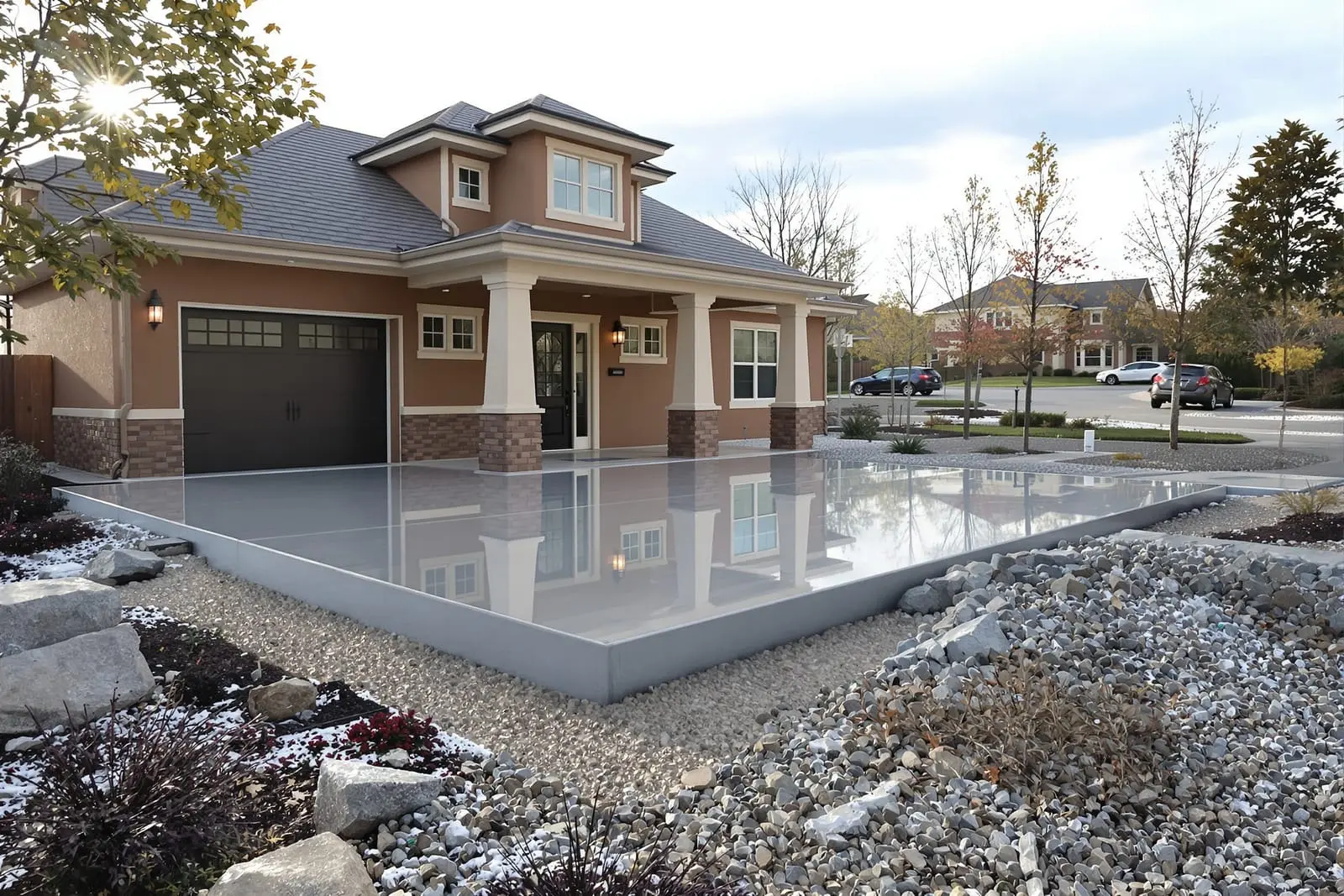
Meet structural and appearance standards with commercial concrete flatwork in Colorado Springs, CO. We pour large slabs, machine pads, aprons, and walkways for a variety of facilities. Our crews use proper reinforcement, joint layouts, and finishing methods for long term performance. Contact us to bid your next commercial slab or flatwork project.
Primetime Concrete Colorado Springs provides professional commercial concrete flatwork throughout Colorado Springs, CO and the surrounding area. Our licensed, insured crew delivers safe, clean, on-time work with a free estimate before anything begins. Call (719) 826-8457 or request your free quote.
Commercial Concrete Flatwork in Colorado Springs That Holds Up to Real Use
Commercial slabs and flatwork are the parts of your property that take the most abuse: forklifts, carts, vehicles, foot traffic, freeze-thaw cycles, and de-icing salts. At Primetime Concrete Colorado Springs, we design and pour commercial concrete flatwork so it stays functional and safe under real-world conditions, not just on paper.
When we talk about commercial flatwork, we are talking about parking lots, loading dock slabs, dumpster pads, warehouse floors, drive lanes, sidewalks, and machine pads. Each of these needs a different concrete mix, reinforcement schedule, and joint layout. For example, a warehouse slab in Colorado Springs might need a higher compressive strength mix and tighter joint spacing than a basic sidewalk, especially if you are running forklifts or pallet jacks.
Our process always starts with use and load. We ask what will be on the slab, how often it will be used, and whether there are special needs like racking, floor drains, or food service regulations. Then we size the slab thickness, rebar or wire mesh, and base prep to match. This is how we avoid the two big problems we see around town: cracked, uneven concrete that was underbuilt, and overbuilt slabs where the owner paid for capacity they will never use.
How We Build Long-Lasting Commercial Slabs & Flatwork
A durable slab starts under the concrete, not in it. For most commercial projects in Colorado Springs, we excavate to remove soft soils and organic material, then install and compact a road base or class 6 aggregate layer. Getting compaction right is critical in our region because we see expansive and occasionally loose soils. We use plate compactors or rollers and test the base as we go so the slab does not settle or heave in random spots.
Next, we set forms and establish drainage. Commercial concrete flatwork should never be flat to the eye; it needs a slight pitch so water leaves the surface instead of pooling and then freezing. For exterior panels, we usually design a slope of about 1 to 2 percent away from buildings and door thresholds. On interior slabs, we relate elevations to floor drains, door saddles, and equipment pads so you do not end up with puddles in work aisles.
Reinforcement is selected based on your use. Light-use sidewalks and small pads may use welded wire mesh. Dumpster pads, drive lanes, and warehouse slabs with heavy racks or forklifts usually get deformed rebar, often #4 or #5, on a grid that is engineered for your loads. In higher-movement soils, we may recommend thicker slabs or additional reinforcement near joints to control curling and cracking.
After that, we place the concrete with attention to access and timing. For tight downtown Colorado Springs sites, we may use concrete pumps to reach interior courtyards or rear loading areas so the mix is placed quickly and evenly. We use internal vibrators where needed to consolidate the concrete around reinforcement and edges, then we strike off, bull float, and finish according to your selected texture.
Finishes, Joints, and Mix Options for Colorado Springs Conditions
Finish choice is not just about appearance, it affects safety, cleaning, and long-term maintenance. For exterior commercial concrete flatwork like walkways and entries, we usually recommend a broom finish. It is slip resistant in snow and ice, and it holds up well to de-icer use. For loading docks where workers walk and drive equipment, we may combine broom-finished traffic strips with slightly smoother lanes so wheels roll easily but people still have traction.
Interior slabs, such as warehouse floors or shop bays, are typically machine troweled to a smooth or hard-trowel finish so pallets, carts, and forklifts move easily. If you are considering polished concrete in the future, we will place and finish the slab in a way that supports grinding and polishing, using a tighter mix and care at the surface so you get an even polish later.
Control joints and expansion joints are critical in our freeze-thaw climate. We lay out a joint pattern that suits your layout and use, typically spacing joints in feet at no more than 2 to 3 times the slab thickness in inches. So a 6 inch slab might have joints around 12 to 15 feet apart, adjusted for columns, doors, and equipment. We saw cut at the right time, not too early so the edges ravel, and not too late so random cracks form. Around columns, door openings, and re-entrant corners, we use additional joints or reinforcement so cracks form where we plan, not across your doorway.
Concrete mix design matters a lot at altitude and in a city that sees freeze, thaw, and de-icing salts. For exterior flatwork, we typically use an air-entrained mix that helps resist scaling and spalling from freeze-thaw cycles. We match the compressive strength to the application, often 4,000 to 5,000 psi for high-load areas, and we monitor water addition carefully on site so finishers do not weaken the surface with excess water.
Costs, Scheduling, and What Affects Your Budget
For commercial concrete flatwork in Colorado Springs, cost is driven far more by site conditions and reinforcement than by concrete alone. The most common budget drivers we see are poor existing soil that needs undercutting and replacement, tight access that requires pumping, thicker slabs for heavy loads, and additional site work like drainage improvements or removal of old concrete.
We are upfront about these factors. During our site visit, Primetime Concrete Colorado Springs checks thickness of existing concrete, looks for signs of soil movement such as differential settling or large cracks, and assesses drainage around buildings and parking areas. If we see something that will come back to haunt you, like downspouts dumping water onto a future slab edge, we flag it before we quote. Often, a small change in layout or drainage can save you from much more expensive repairs later.
Seasonal timing also affects both cost and quality. In Colorado Springs, the best months for exterior pours are usually April through October. Cold weather flatwork can be done, but it requires blankets, accelerators, and tight coordination to prevent freezing and surface damage, which adds to cost. Summer heat and low humidity can cause rapid surface drying, so we adjust pour times to mornings or evenings, use curing compounds, and sometimes misting or evaporation reducers to prevent surface checking.
Permits and inspections, where required, are coordinated with local authorities and project managers. On many commercial jobs, we work alongside other trades, so we plan pours to avoid conflicts with underground utilities, asphalt crews, and steel erection. Clear scheduling reduces downtime for your business, whether that means weekend pours for entry sidewalks or phased work in active warehouses so you can keep operating.
Common Problems We Prevent and How We Stand Behind Our Work
Most of the commercial slabs we replace in Colorado Springs fail for predictable reasons: thin sections placed over soft or uncompacted base, poor drainage, joints laid out without regard to the building, or finishing practices that closed the surface too early and trapped bleed water. When you see scaling, surface flaking, or potholes near downspouts or vehicle paths, these are usually signs of those early shortcuts.
Primetime Concrete Colorado Springs focuses on prevention. We design for drainage, we insist on proper base prep, and we treat control joints as a structural planning tool, not an afterthought. On exterior commercial concrete flatwork, we talk with owners and facility managers about realistic maintenance, like using proper de-icers, cleaning oils and chemicals promptly, and resealing high-traffic areas on a reasonable schedule. For interior slabs, we discuss wheel types, point loads from racking, and how traffic patterns might shift so the slab design matches your growth plans.
Before we leave your site, we walk the project with you, point out joint locations, and discuss how curing and early use will affect long-term performance. We provide guidance on when lifts, pallet jacks, or vehicles can safely use different areas, depending on slab thickness and design strength. Our goal is not just to get the pour done, but to help you get years of trouble-free use from your slab, with fewer surprises and repairs down the line.
“
Professional commercial slabs & flatwork, done right the first time, quality materials, honest pricing, and results that last.
Primetime Concrete Colorado Springs
Commercial Slabs & Flatwork Across Our Service Area