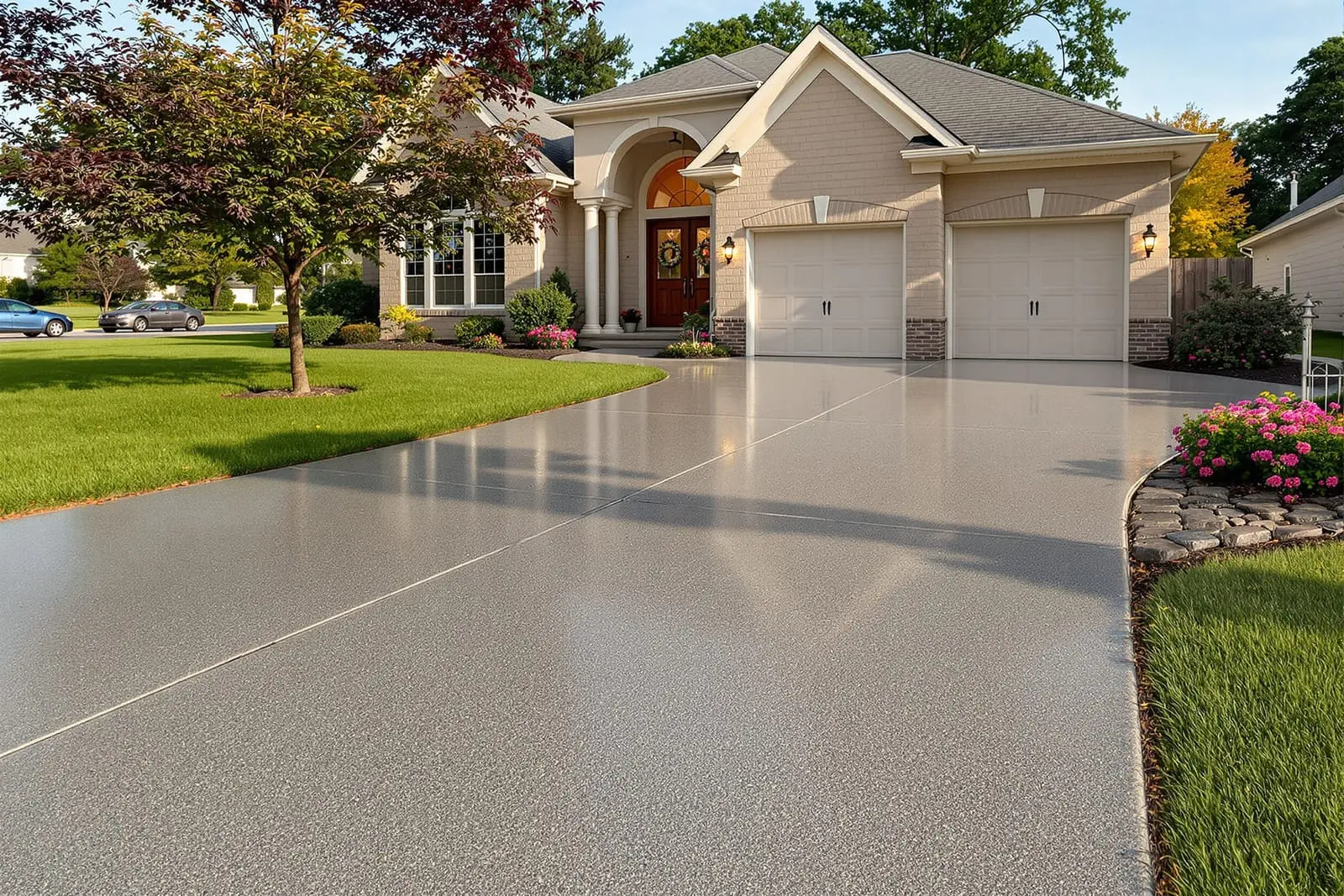
Turn a cracked or failing driveway into a smooth, safe surface with concrete driveway repair in Colorado Springs, CO. We repair spalling, heaving, and settled slabs or provide full replacement when needed. Our team evaluates the cause of damage so your new surface lasts. Get a driveway repair or replacement estimate tailored to your property today.
Primetime Concrete Colorado Springs provides professional concrete driveway repair throughout Colorado Springs, CO and the surrounding area. Our licensed, insured crew delivers safe, clean, on-time work with a free estimate before anything begins. Call (719) 826-8457 or request your free quote.
Concrete driveway repair that fits Colorado Springs conditions
Concrete driveways in Colorado Springs take a beating from freeze-thaw cycles, road salts, and shifting soils. At Primetime Concrete Colorado Springs, we focus specifically on how those local conditions affect your driveway so repairs actually last, not just look good for one season.
Most homeowners call us for one of five issues: cracks that keep getting wider, sunken slabs that create trip hazards, crumbling edges from snowplows, surface spalling from de-icing salts, and drainage problems that send water toward the garage. The first thing we do is walk the entire driveway with you, not just the obvious damaged area, to see how water flows, where the control joints are, and how the existing concrete was poured.
You will get straightforward feedback on whether repair is realistic or if replacement is the smarter long-term move. If your driveway has isolated cracks and solid base support, spot repairs usually make sense. If large sections are heaving, multiple slabs are sinking, or the surface is badly spalled across most of the area, we explain what full or partial replacement would involve, along with costs and timelines in plain numbers.
We also look at what surrounds the driveway: your street elevation, city sidewalk, garage floor height, and nearby downspouts. These all affect how thick the new concrete should be, where to place joints, and whether we need to improve base material or drainage to prevent the same problem from coming back.
How we repair cracked or sunken concrete driveways
Concrete driveway repair is not just filling a crack with gray goo. Primetime Concrete Colorado Springs uses different methods depending on what we find under and around the slab.
For structural cracks that are not moving, we clean the crack with a saw or grinder, remove weak edges, then use a flexible, high-grade concrete crack sealant or epoxy-based filler. This prevents water from getting into the base and freezing, which is a major issue in Colorado Springs winters. Hairline, non-moving cracks may only need sealing to stop moisture intrusion, while wider cracks sometimes get stitched with rebar dowels across the break before patching.
If part of your driveway has settled, we consider slab lifting options. Where possible, we drill small holes, then pump material underneath to raise the slab back to level. In some cases that is polyurethane foam, in others a cementitious grout, depending on soil conditions and weight. This is common near garages and at the transition to sidewalks, where compaction was poor when the home was built.
For surface spalling and pitting, we mechanically grind away the loose material and install a bonded resurfacer if the base concrete is still structurally sound. We are honest about the limits of resurfacing in Colorado Springs. Thin overlays can fail quickly if not prepared and cured correctly, or if used over badly deteriorated concrete, so we only recommend them when there is enough solid material left to hold a bond.
If water is causing repeated freeze damage, we may cut a shallow drainage channel, adjust slopes with patching compounds, or suggest adding a drain at the low point. Repairs that ignore water management usually do not survive more than a couple winters here.
When replacement is smarter than repair
Sometimes the most cost-effective concrete driveway repair is to stop patching and replace entire sections. Primetime Concrete Colorado Springs recommends replacement when we see widespread cracking through the slab, multiple areas of settling or heaving, deep freeze-thaw damage, or a driveway that was poured too thin from the start.
A full replacement starts with careful demolition. We typically use a skid steer and concrete breaker to remove the old driveway in manageable pieces, then haul the debris to a concrete recycling facility. During removal we see what the builder left under your old driveway, and in many Colorado Springs neighborhoods we find undersized or inconsistent base material, which is a big reason driveways fail early.
We then rebuild the base with compacted road base, usually 4 to 6 inches thick, depending on soil conditions and vehicle loads. This is compacted in lifts with a plate compactor or roller, and we regrade the area to move water away from the house and toward the street or a proper drainage point.
For the new slab we typically pour 4 inches thick for standard passenger vehicles, and 5 inches or more where heavy trucks or RVs regularly park. We almost always use a 4000 psi or higher concrete mix with air entrainment to handle freeze-thaw cycles, and we add fiber reinforcement or rebar where needed. Control joints are cut or formed at planned intervals to control where the concrete cracks as it cures, instead of random cracking across the surface.
If only one section is bad, for example the apron at the street or an area in front of the garage, we can do a partial replacement. In that case we sawcut clean edges so the new concrete ties in neatly, and we pin to the existing slab with rebar where appropriate to prevent vertical movement between new and old concrete.
Concrete mix, thickness, and finish options for your driveway
The way your driveway is mixed, placed, and finished matters as much as the repair or replacement decision. Primetime Concrete Colorado Springs works with local ready-mix suppliers who understand our altitude and weather patterns, then adjusts mixes for the project and time of year.
For Colorado Springs residential driveways we generally recommend a 4000 to 4500 psi air-entrained mix, which handles the repeated freeze-thaw cycles in this region better than basic 3000 psi mixes. We also consider adding supplementary cementitious materials that improve durability and reduce permeability, which can help when de-icing salts and magnesium chloride are used on nearby roads.
Thickness is matched to use. Daily passenger cars on stable soil often do fine with 4 inches and proper base prep. If you have a work truck, trailer, or RV that will sit in one spot, we discuss thickening that area to 5 or 6 inches and adding steel reinforcement. It costs more upfront but typically prevents the rutting and cracking we see in driveways that were poured too thin for their actual use.
For finishes, broom finish is the standard choice because it offers good traction in snow and ice. We can also add a light decorative border, sawcut patterns, or moderate color without turning it into a high-maintenance decorative slab. For homeowners who want color, we explain that darker colors warm faster in the sun, which can help melting but also increases thermal movement, so we plan control joints and reinforcement accordingly.
We also go over curing options. In our dry climate, proper curing is critical. We usually apply a curing compound after finishing, and for larger or high-value projects we might recommend wet curing or curing blankets to slow moisture loss, especially during windy or hot conditions common along the Front Range.
What affects the cost of concrete driveway repair in Colorado Springs
Homeowners often ask why quotes for concrete driveway repair or replacement in Colorado Springs can vary so much. Primetime Concrete Colorado Springs is upfront about what drives your price so you can compare bids more accurately.
Key factors include access to the site, total square footage, thickness of the slab, and whether we need to remove and replace the existing base material. Tight access that requires extra labor or smaller equipment can add to cost, while open driveways that are easy to reach with concrete trucks are more efficient.
Soil conditions also matter. Areas like parts of eastern Colorado Springs can have expansive or poorly compacted soils that need more base preparation. If water from sprinklers or downspouts has been softening the base, we may recommend drainage corrections or additional road base. That adds to the initial cost but prevents repeated sinking and cracking.
Concrete mix and reinforcement are another cost lever. A higher strength mix, steel rebar, and thicker sections cost more initially but generally reduce long term maintenance and replacement risk. When we quote, we tell you exactly what mix, thickness, and reinforcement we are including so you are not comparing a 3 inch slab with wire mesh to a 5 inch slab with rebar without realizing it.
Finally, timing and weather play a role. Working in winter is possible but may require accelerators, blankets, or additional site visits to protect fresh concrete from freezing. During peak construction months scheduling is tighter, but we still plan pours for cooler parts of the day when necessary to control cracking and finishing quality. All of these details are spelled out in your written estimate so there are no surprises later.
What to know before hiring a concrete driveway contractor
Before you hire anyone for concrete driveway repair or replacement in Colorado Springs, there are a few things worth checking. Primetime Concrete Colorado Springs encourages homeowners to ask these questions of any contractor, including us.
Ask how they evaluate whether repair or replacement is better for your specific driveway. If a contractor only pushes one option without explaining why, that is a red flag. You should hear a clear explanation that covers base condition, crack patterns, overall age of the driveway, and your plans for vehicle use.
Request details about base preparation, slab thickness, concrete mix strength, reinforcement type, and joint layout. These are not minor technicalities. They are the difference between a driveway that looks good for two years and one that holds up for decades in Colorado Springs weather.
Confirm how they protect adjacent areas. A careful crew lays down plywood or mats to protect lawns where equipment drives, keeps demo debris controlled, and cleans up concrete splatter on sidewalks or curbs the same day. We also recommend asking who will actually be on site, the company’s own crew or only subcontractors you have never met.
Finally, talk about how the job will wrap up. You should know how long to stay off the new driveway (typically at least 24 hours for foot traffic and 7 days for vehicles, longer for very heavy loads), what de-icing products to avoid on new concrete, and what kind of warranty is provided on materials and workmanship. A solid driveway project is as much about planning and follow-through as it is about the pour itself.
“
Professional concrete driveway repair & replacement, done right the first time, quality materials, honest pricing, and results that last.
Primetime Concrete Colorado Springs
Concrete Driveway Repair & Replacement Across Our Service Area